
Worldpay’s report on The global expansion of stablecoins demonstrates two things: the business case for stablecoins is very real and governments are eager to support their growth.
The Business Case for Stablecoins
Demand for stablecoins has never been higher.
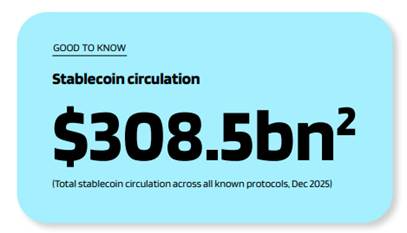
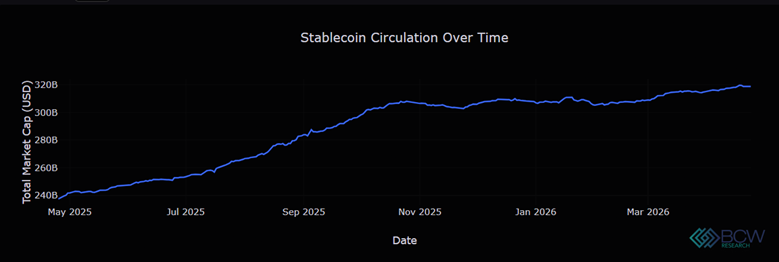
The total amount of stablecoins in circulation is about $319B, up about $10B since December 2025. That growth trajectory is not slowing down.
It’s no mystery as to why major businesses would want to use stablecoins. Their speed, stability, and simplicity make them ideal tools for payments, especially cross-border payments that tend to be slow, cumbersome, and costly for all parties involved.
- Speed: stablecoins don’t rely on banks for backing or local clearing infrastructure. This reduces delays in settlements.
- Stability: cryptocurrency transactions are famously lightning-fast on many networks. However, the value of native coins can dramatically fluctuate. Stablecoins retain blockchain speeds while remaining value-pegged.
- Simplicity: With more integrations, apps and financial institutions make it easier and easier for users to convert fiat to and from stablecoins.
Removing Regulatory Roadblocks
The upside that enterprises are seeing from integrating stablecoins has been hindered by regulatory opacity across global markets – but this is changing.
In the absence of a transnational legal framework for handling stablecoins, each country must set clear rules for how businesses can mint and use them. However, national regulations tend to change slowly. This has created a bottleneck for enterprise stablecoin adoption.
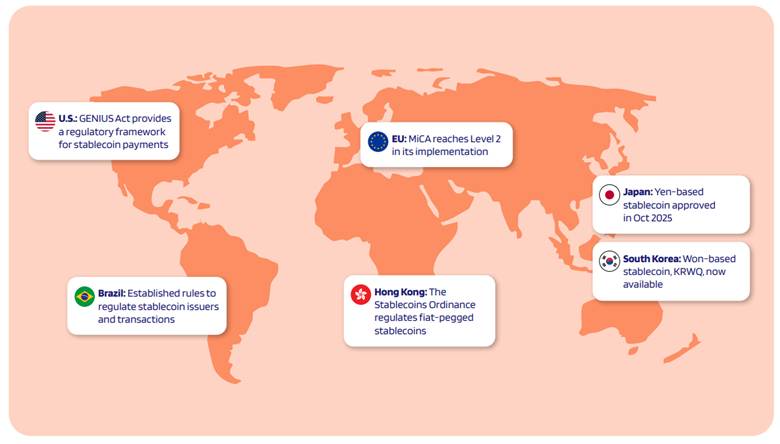
In the past year, regulations in at least six major markets have shifted towards greater clarity. Stablecoin adoption appears to have benefitted from this.
- The USA: The GENIUS Act spells out exactly who can issue a stablecoin for payment, how they must be backed and vetted, and how they can be used. Furthermore, the CLARITY Act will address the fundamental classification of digital assets and how they are regulated.
- The EU: The Markets in Crypto-Assets (MiCA) framework outlines technical standards and detailed rules around organizational requirements, service quality and complaint handling.
- APAC: The Hong Kong and Japanese governments have brought stablecoin issuers under a strict licensing regime and approved their first sanction stablecoin respectively. South Korean regulations may not be far behind.
- LATAM: Brazil’s central bank has rules pertaining to how stablecoins are classified and how they must be backed by capital.
The Bottom Line
There is a positive correlation to the staying power of stablecoins and the rate at which cross-border payments regimes shift. Stablecoins have surely entered the mainstream consciousness of financial institutions as more of them are adopting them into their settlement toolkits.